
Cuisine Branding for a Website & Booklet
Context:
This college project was based around creating the branding,
website design, and a cookbook layout based around a specific
type of cultural cuisine. It achieves a consistent brand and tone through the use of a simple color palette and a hand-picked selection of typefaces.
Branding and Visual Design:
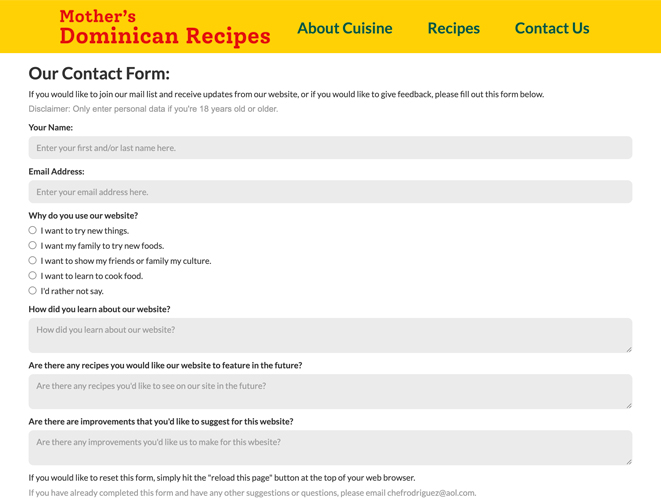
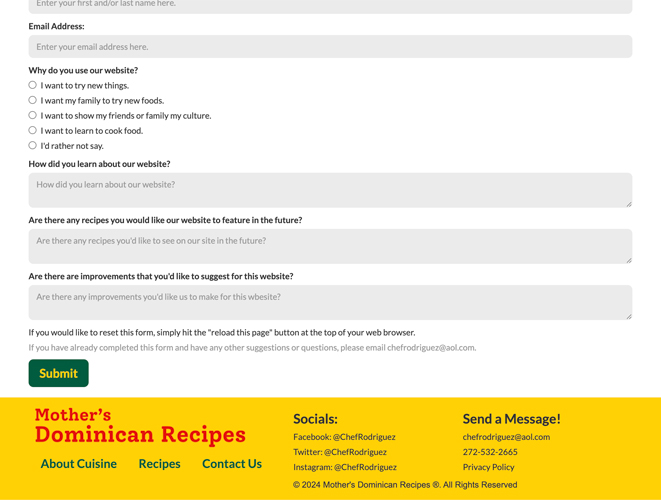
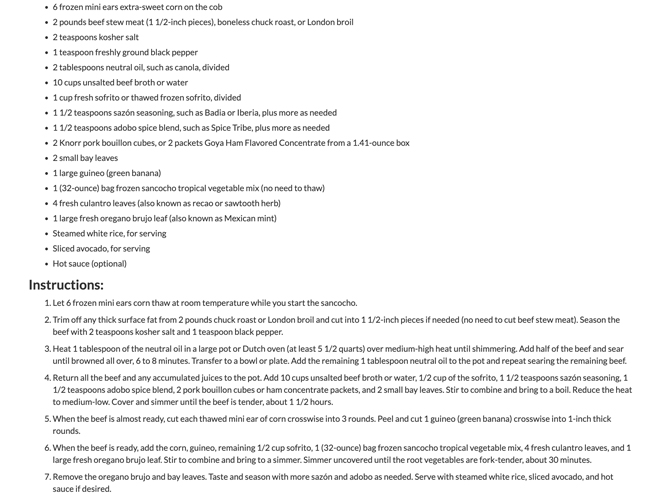
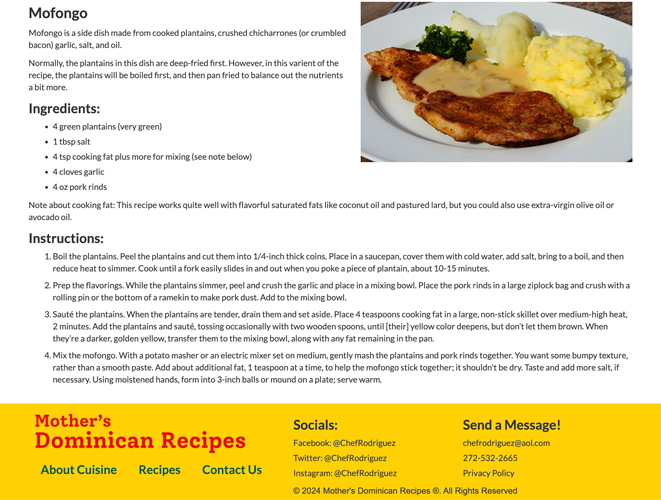
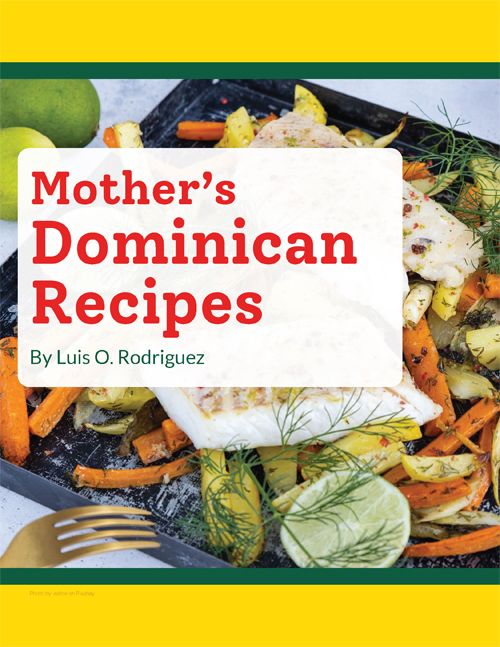
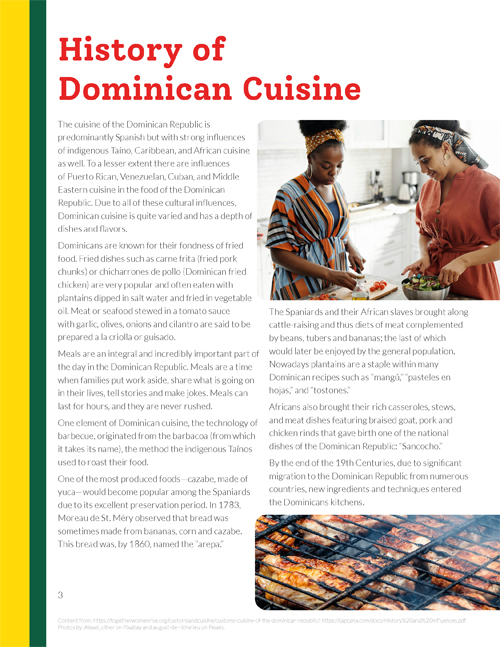
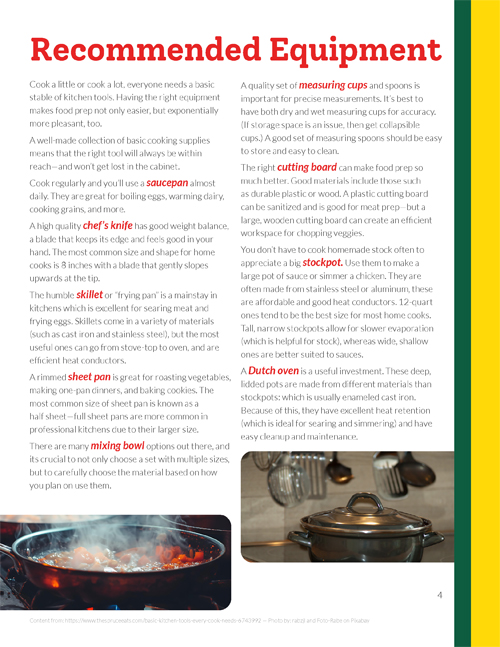
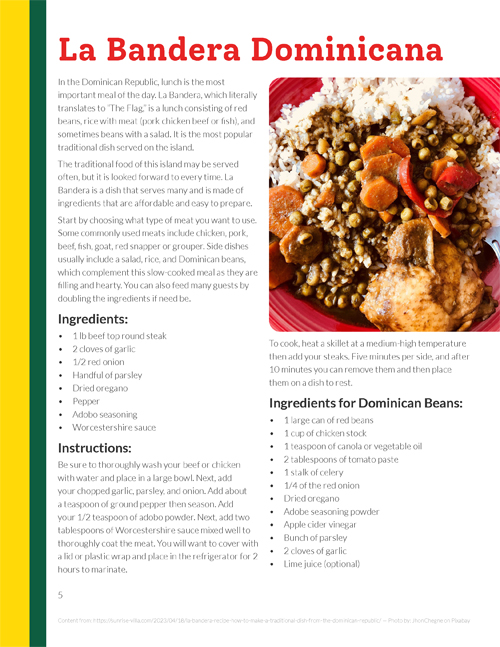
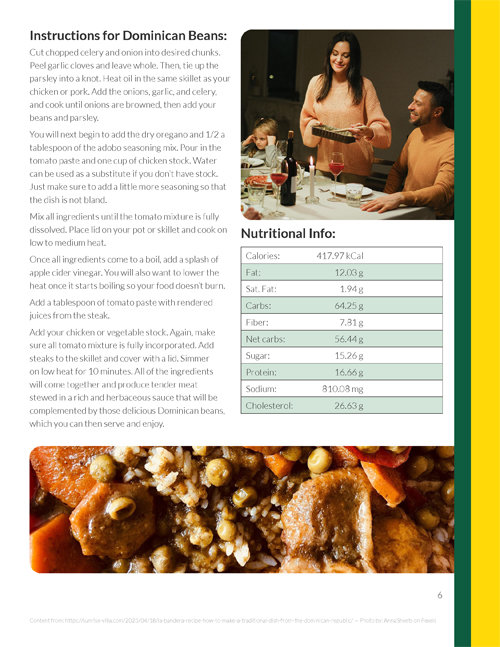
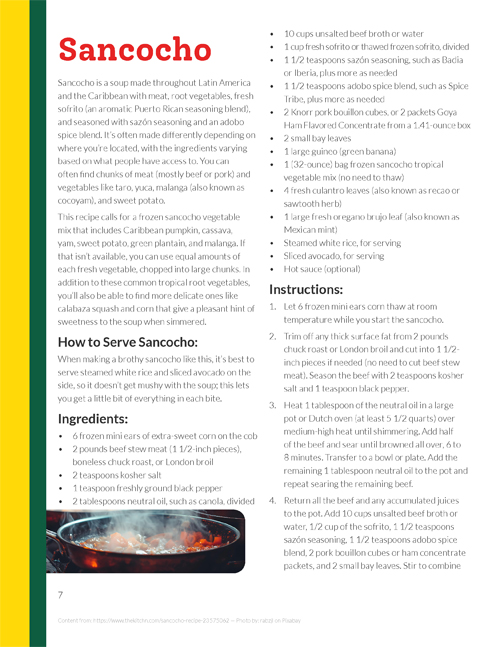
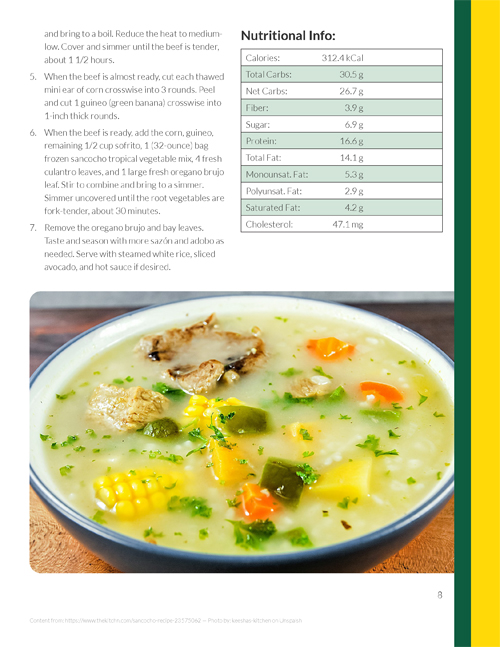
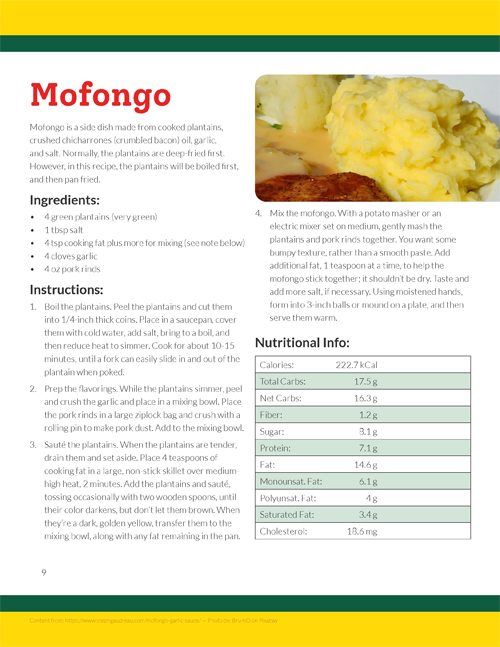
Going with Dominican cuisine, I developed a brand system and guidelines based around the ideals of tradition and family time. The system consisted of vivid colors: with red (hexadecimal #e52726) from the Dominican flag, yellow (hexadecimal #ffda02) for the vibrant tropical tone, and a rich, deep green (hexadecimal #005c3f) to signify fresh, healthy foods. The typeface “Solway” was used for the logo due to its friendly roundness. “Gelasio” was used for the headings of the book and the website's logo due to its elegant, traditional structure and its subtle, friendly roundness. Lastly, “Lato” was used for the body copy due to its simple, readable design. To reinforce the emphasis on family time, numerous images of families cooking and eating together were featured on the website and booklet, along with imagery of the dishes whose recipes are listed in each creation. The name of the website and cookbook is "Mother's Dominican Recipes," to further go along with the theme of food being intertwined with family time.
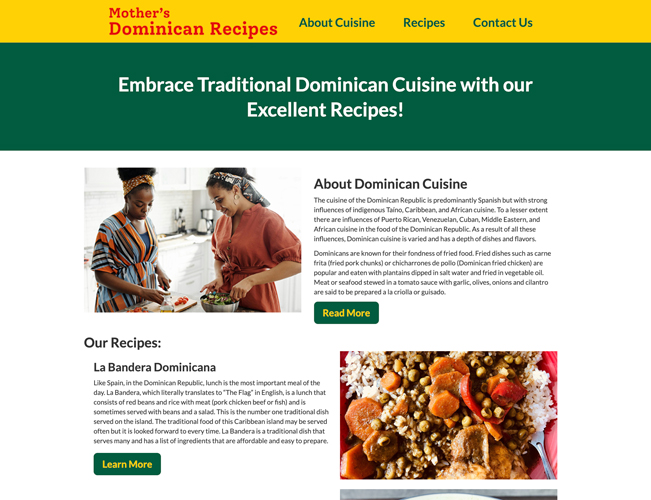
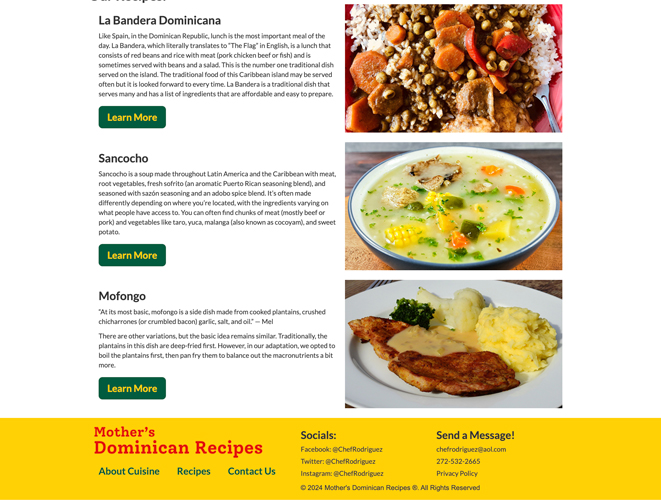
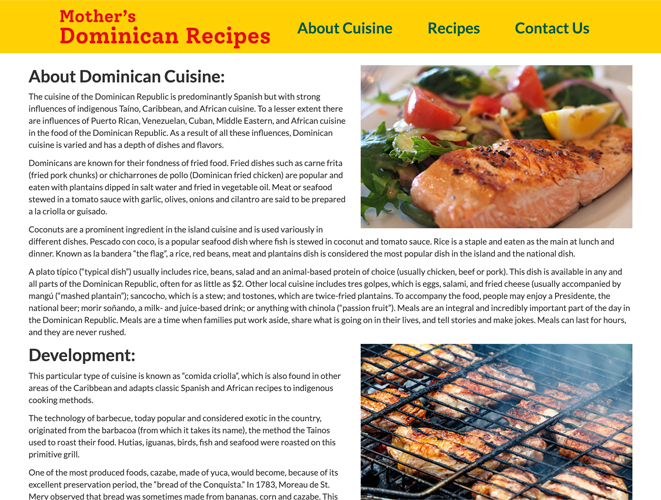
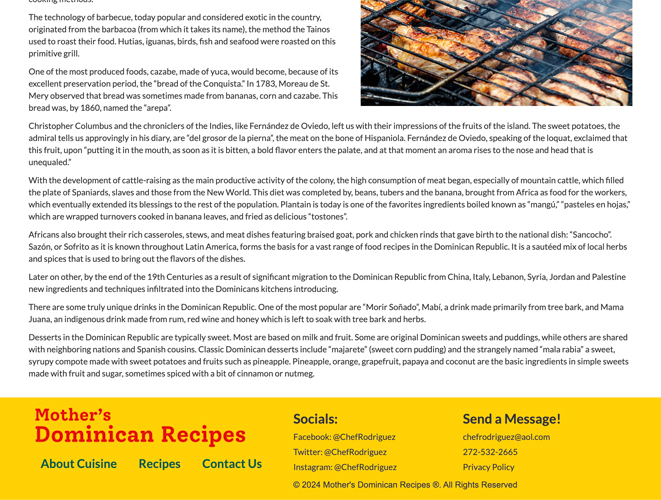


The Booklet:
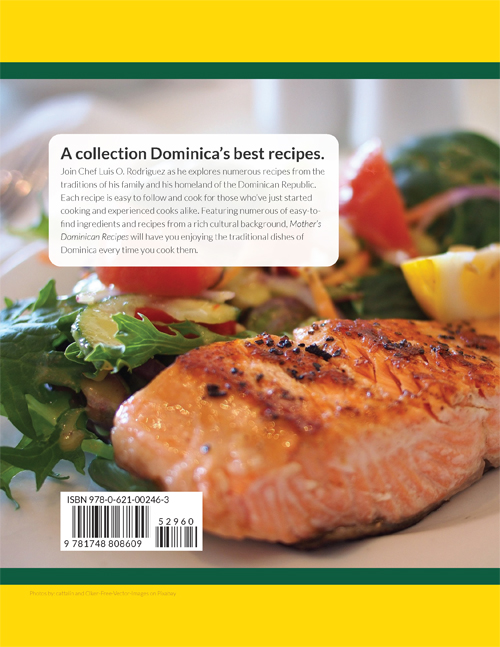
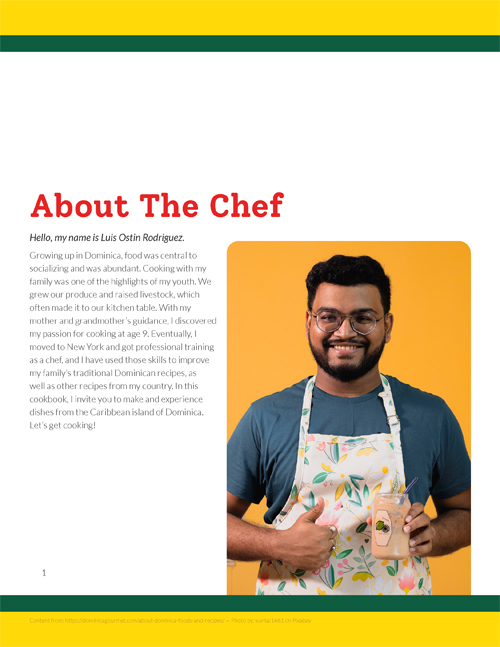
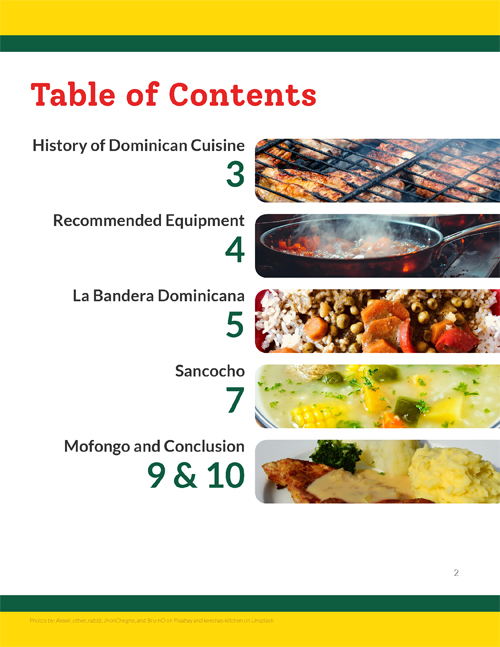
The cookbook was produced after the website and allowed for additional layouts for the project, as well as new designs for certain lists, such as the nutritional information list: which incorporates a single-column grid where every other line uses a tint of the brand's green. A total of 12 pages were created, including the front and back covers, an "About the Author" page, a table of contents page, a concluding page, and more.

Credits:
- Photos by eatde, kuntal1461, Alexei_other, rabzjl, JhonChegne, Bru-nO, Foto-Rabe, and cattalin on Pixabay
- Other photos by keeshas-kitchen on Unsplash
- Photos also sourced from august-de-richelieu, and AnnaShvets on Pexels.
- Barcode image by Clker-Free-Vector-Images on Pixabay
- https://dominicagourmet.com/about-dominica-foods-and-recipes/
- https://togetherwomenrise.org/customsandcuisine/customs-cuisine-of-the-dominican-republic/
- https://capcana.com/docs/History%20and%20Influences.pdf
- https://www.thespruceeats.com/basic-kitchen-tools-every-cook-needs-6743992
- https://sunrise-villa.com/2023/04/18/la-bandera-recipe-how-to-make-a-traditional-dish-from-the-dominican-republic/
- https://www.thekitchn.com/sancocho-recipe-23575062
- https://www.stephgaudreau.com/mofongo-garlic-sauce/
- https://new-york.selfup.com/blogs/nyc-magazine/importance-of-cooking-daily-life